
MB Stone 5 Inch Ultra Turbo Flexible Hybrid
About the Product
Guide
Reviews
FAQs
Technical Data
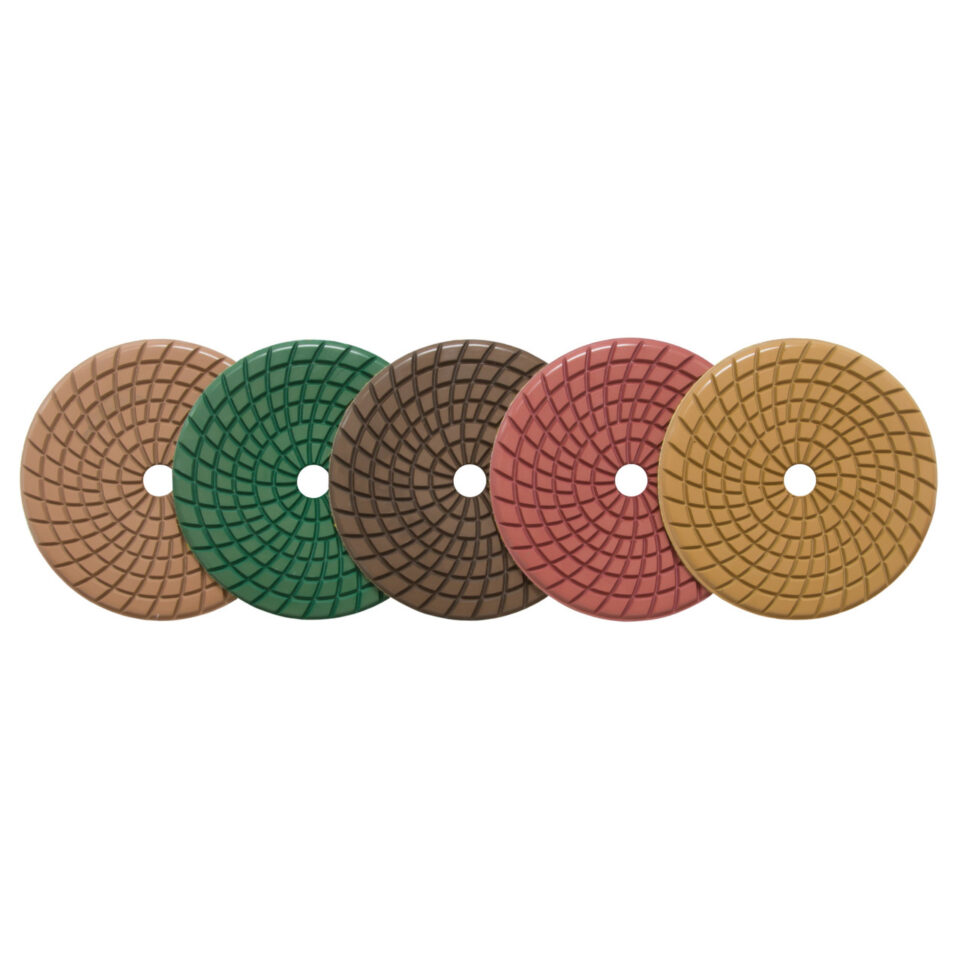
5 Inch Ultra Turbo Flexible Hybrids are a copper/resin hybrid bond diamond designed for your harder marbles. These pads are great for transitioning from metals into the ultra turbo pads.
When used with our original Ultra Turbo diamonds, you can jump up a step from where you left off with the Ultra Hybrids. For example, if you finish with the 200 grit Ultra Turbo Hybrid, you can jump right to original Ultra Turbo.
Save time and money by using the best pads available on the market.
Not recommended for concrete.
Available in 30, 50, 120, 220, 400 grits. FULL SET option is 30 through 400 grits
How to Use Ultra Turbo Flexible Hybrid Pads
| Used For Surface(s) | Marble, Limestone, Travertine, Serpentine |
| Application Type(s) | Hone, Polish |
| Weight | 0.2 lb |
Step 1: Assess the Stone Surface
Inspect the marble, limestone, or travertine surface to determine the level of damage. For deep scratches, heavy wear, or saw marks, start with a lower grit. For light etching or surface dullness, you may be able to begin with 220 grit or higher.
Step 2: Select the Correct Backer Pad and Grit
Attach the Ultra Turbo Flexible Hybrid Pad to a compatible Hook & Loop backer pad. Center the pad carefully before pressing it into place to reduce wobble and maintain better machine control.
Step 3: Prepare the Work Area
Use plenty of clean water during the process. Protect surrounding surfaces as needed, and keep a spray bottle, squeegee, sponge, and bucket nearby to manage slurry and keep the work area clean.
Step 4: Set the Machine to Low Speed
Use a compatible hand machine, variable-speed polisher, or restoration machine at a controlled low speed, typically around 600 RPM. Apply firm, even pressure while keeping the machine flat on the stone.
Step 5: Work in a Controlled Pattern
Move the machine in a consistent, overlapping pattern. Start with the perimeter, then work across the surface using about 50% overlap on each pass. Keep the pad flat, especially when working over edges, to avoid creating haze or uneven scratch patterns.
Step 6: Complete Multiple Passes per Grit
For the first cutting step, make several thorough passes to remove visible damage and previous polish. As you move into higher grits, continue overlapping your passes while monitoring the surface for clarity, consistency, and remaining scratches.
Step 7: Clean Between Each Grit
After each grit, squeegee and clean the surface thoroughly. Remove slurry, loose abrasive, and dirty water from the stone and edges before moving to the next grit to prevent contamination and unwanted scratches.
Step 8: Progress Through the Grit Sequence
Move through the required grit levels based on the finish you want to achieve. Higher grits such as 800, 1800, and 3500 refine the surface and begin building reflection, clarity, and shine.
Step 9: Inspect the Finish
Check the surface from a low angle to confirm the finish is even. Look for dull areas, haze, scratches, or inconsistent reflection before moving to the final polishing stage.
Step 10: Finish with a Polishing Compound
After the highest diamond grit, use a professional polishing compound such as MB-18 Ultra 5 or MB-22 or MB12 when needed to achieve a deeper, factory-grade gloss or mirror-like finish.
Frequently Asked Questions
What machines are compatible with these pads?
What RPM range is recommended?
Should these pads be used wet?
Do I need to use every grit in the sequence?
What should be done after finishing with the 3500-grit pad?
Key Features & Capabilities
Recommended Stone Types: Designed for calcite-based natural stone surfaces, including marble, limestone, and travertine.
Available Sizes & Grit Options: Offered in multiple diameters, including 3”, 4”, 5”, and 7”, with grit levels commonly ranging from 50 through 3500 for everything from initial honing to final high-polish finishing.
Flexible Performance Design: Built with a flexible structure that adapts to curved edges, corners, and contoured surfaces while delivering fast cutting action, improved clarity, and a refined shine.
Application Method: Best used wet with compatible polishing equipment such as a hand-held polisher, floor machine, or variable-speed drill, typically operated within the 2,200–4,500 RPM range.