
3 Inch NSI Floating Turbo
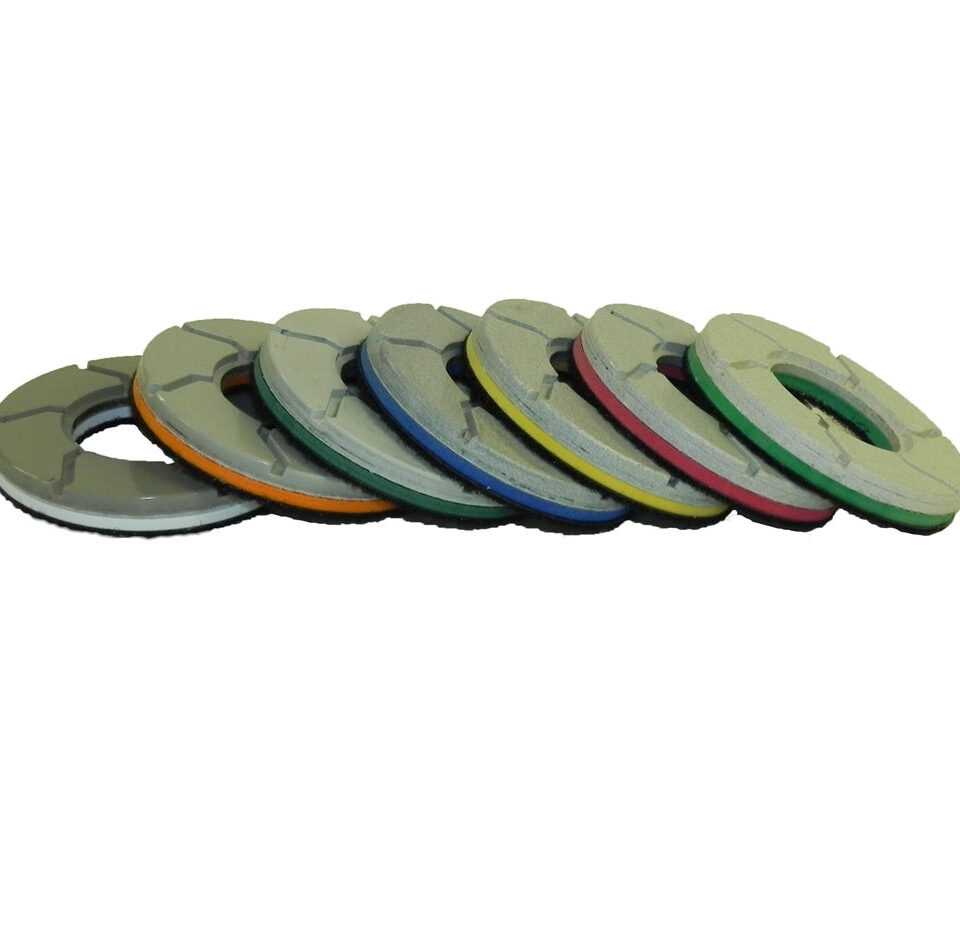
About the Product
Guide
Reviews
FAQs
Technical Data
3 Inch NSI Floating Turbo High quality semi-rigid turbos used for top and edge polishing on most natural stone surfaces. The plastic laminate keeps the abrasive rigid as it wears thin to yield a consistent flat polish and the hook and loop provides enough ”float” to make them extremely forgiving in use.
Available Grits: 60, 150, 300, 500, 1000, 2000, 3000
SL3 Adapter and 3 Inch Center Hub Backer sold separately.
How to Use 3 Inch NSI Floating Turbos for Stone Restoration
Step 1: Evaluate the Surface Condition
Inspect the stone carefully and determine the severity of the damage. Deep scratches, fabrication marks, lippage, or edge defects may require starting with a lower grit such as 60 or 150. For lighter surface refinement, a higher starting grit may be appropriate.
Always perform a test area before beginning a full restoration.
Step 2: Install the Proper Accessories
Attach the Floating Turbo to a compatible 3-Inch Center Hub Backer and secure the assembly using an SL3 Snail Lock Adapter.
Verify that all components are mounted securely before operating the machine.
Step 3: Establish Water Flow
Floating Turbos are designed exclusively for wet use. Before starting, ensure the stone surface and pad remain adequately lubricated with clean water.
Proper water flow helps:
- Reduce heat buildup
- Extend pad life
- Improve polishing performance
- Flush away abrasive slurry
Step 4: Select the Appropriate Starting Grit
Choose the starting grit based on the condition of the stone:
- 60 Grit – aggressive material removal and heavy defects
- 150 Grit – scratch removal and repair work
- 300 Grit – refinement after repairs
- 500 Grit – beginning polishing stages
- 1000 Grit and above – gloss development and finishing
Avoid starting with a grit finer than necessary, as this can increase labor time and reduce efficiency.
Step 5: Begin Surface Correction
Operate the machine at an appropriate speed, never exceeding 4,000 RPM.
Use slow, overlapping passes while maintaining consistent contact with the surface. Allow the floating design of the pad to do the work rather than forcing the abrasive into the stone.
Focus on completely removing the existing scratch pattern before progressing.
Step 6: Keep the Pad Flat
One of the primary advantages of Floating Turbos is their ability to maintain surface flatness.
Apply moderate, even pressure and avoid tilting the machine excessively. Keeping the pad flat helps prevent waves, low spots, and uneven polishing patterns.
Step 7: Progress Through Each Grit Sequentially
After completing the initial grit, thoroughly clean the surface and move to the next grit in the sequence.
A typical progression may include:
60 → 150 → 300 → 500 → 1000 → 2000 → 3000
Each grit should completely remove the scratch pattern left by the previous step.
Step 8: Widen the Repair Area as You Progress
When performing scratch repairs, gradually increase the size of the work area with each successive grit.
This feathering technique helps blend the repair into the surrounding stone and minimizes visible transition lines.
Step 9: Inspect Between Grits
After each grit, rinse and dry the surface before inspection.
Use direct lighting whenever possible to identify remaining scratches or inconsistencies before advancing to the next polishing stage.
Step 10: Complete the Final Polish
Once the 3000 grit stage is complete, inspect the surface for clarity, gloss, and uniformity.
Depending on the stone type and desired finish, many professionals follow the Floating Turbo sequence with a polishing compound or final polishing system to maximize reflectivity and color enhancement.
Step 11: Clean and Store the Pads
After use, rinse the pads thoroughly with clean water to remove slurry and abrasive residue.
Allow them to air dry completely before storage. Proper maintenance helps preserve cutting performance and extends pad life across future restoration projects.
Frequently Asked Questions
What are NSI Floating Turbos primarily used for?
What makes a Floating Turbo different from a standard resin pad?
Are Floating Turbos used wet or dry?
What is the maximum recommended RPM?
What grit should I start with?
Can Floating Turbos remove scratches from granite countertops?
Can these pads be used on engineered stone or quartz?
What accessories are required to use Floating Turbos?
Why are they called "Floating" Turbos?
Can they be used for edge polishing?
How do I prevent waves or uneven polishing?
Should I clean the pads after use?
When should I use Floating Turbos instead of polishing compounds?
Key Features & Capabilities
Floating Hook & Loop Design
The Floating Turbo’s unique hook-and-loop backing system creates a slight cushioning effect between the abrasive and the stone surface. This floating action helps reduce chatter, minimize gouging, and maintain a flatter polishing profile, particularly during scratch removal and top polishing applications.
Semi-Rigid Construction for Consistent Results
A reinforced plastic laminate backing keeps the abrasive rigid as the diamond layer wears. This design allows the pad to maintain consistent cutting performance and surface flatness throughout its usable life.
Designed for Granite & Quartzite Restoration
The Floating Turbo system is specifically engineered for polishing and repairing dense natural stones such as granite and quartzite. It excels at restoring gloss, removing surface scratches, and preparing surfaces for final polishing compounds.
Excellent for Top Polishing Applications
Many restoration professionals prefer Floating Turbos for top polishing because they provide greater control over material removal while helping maintain a flat, uniform surface.
Ideal for Edge Refinement
The pad performs exceptionally well on flat edges, eased edges, and router-profile preparation, making it a versatile solution for both fabrication and restoration work.
Progressive Grit System
Available in the following grit sequence:
- 60 Grit
- 150 Grit
- 300 Grit
- 500 Grit
- 1000 Grit
- 2000 Grit
- 3000 Grit
This progression allows professionals to move from scratch removal and honing through high-gloss polishing.
Wet Use Technology
Floating Turbos are designed exclusively for wet applications. Continuous water flow helps reduce heat buildup, flush away slurry, improve pad life, and maximize polishing performance.
Fast Change Attachment System
The center hub design allows quick attachment when used with compatible NSI accessories, helping technicians move efficiently through grit changes during restoration projects.
Controlled Material Removal
Unlike more aggressive grinding tools, Floating Turbos provide controlled cutting action that allows operators to gradually refine the surface while maintaining clarity and consistency.
Maximum Operating Speed
For optimal performance and safety, Floating Turbos should not exceed 4,000 RPM. Maintaining proper machine speed helps improve finish quality and prolong abrasive life.